PLATES / SIX ARCHITECTURES, ONE RISING LINE
The tower that builds itself
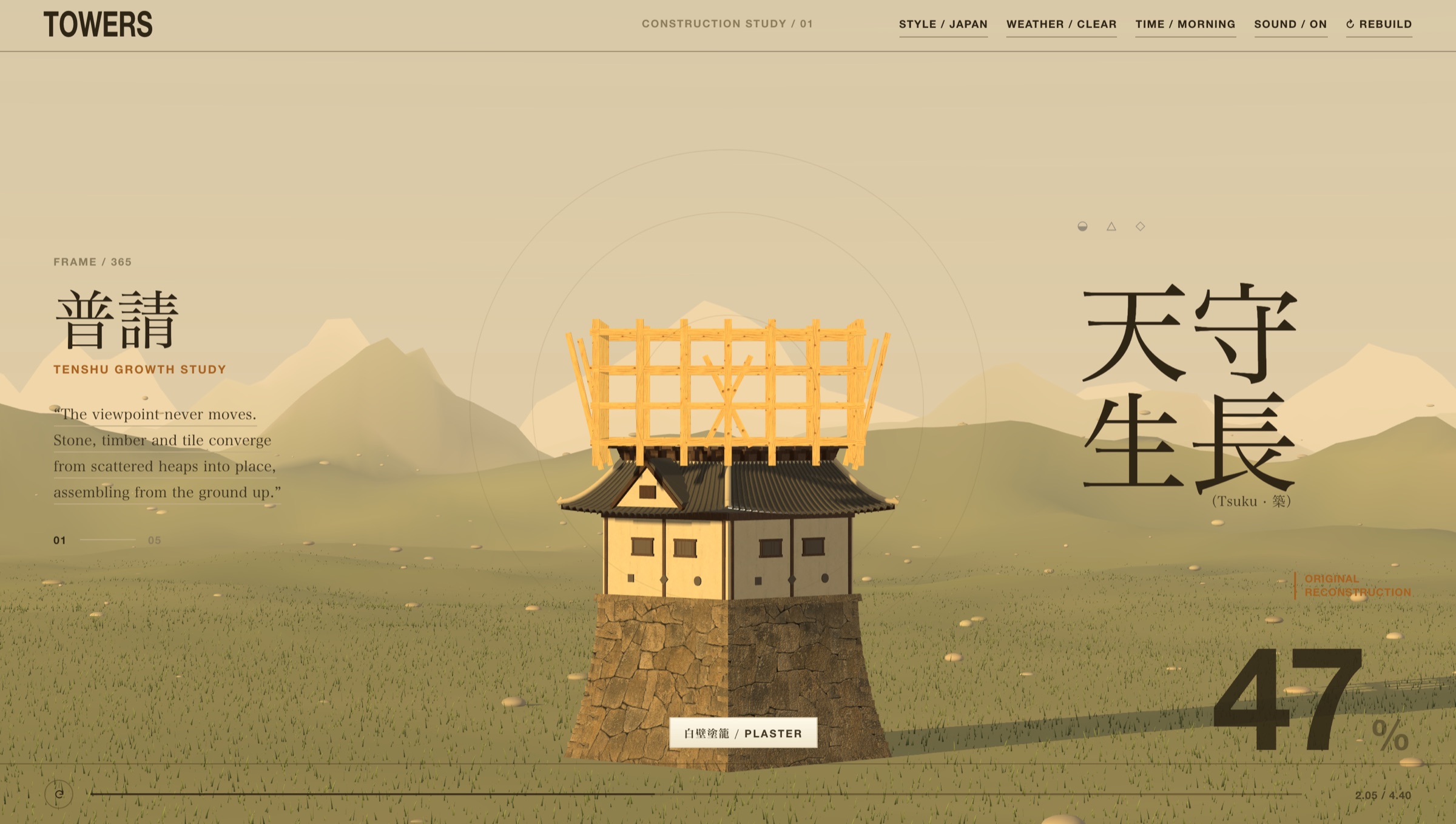
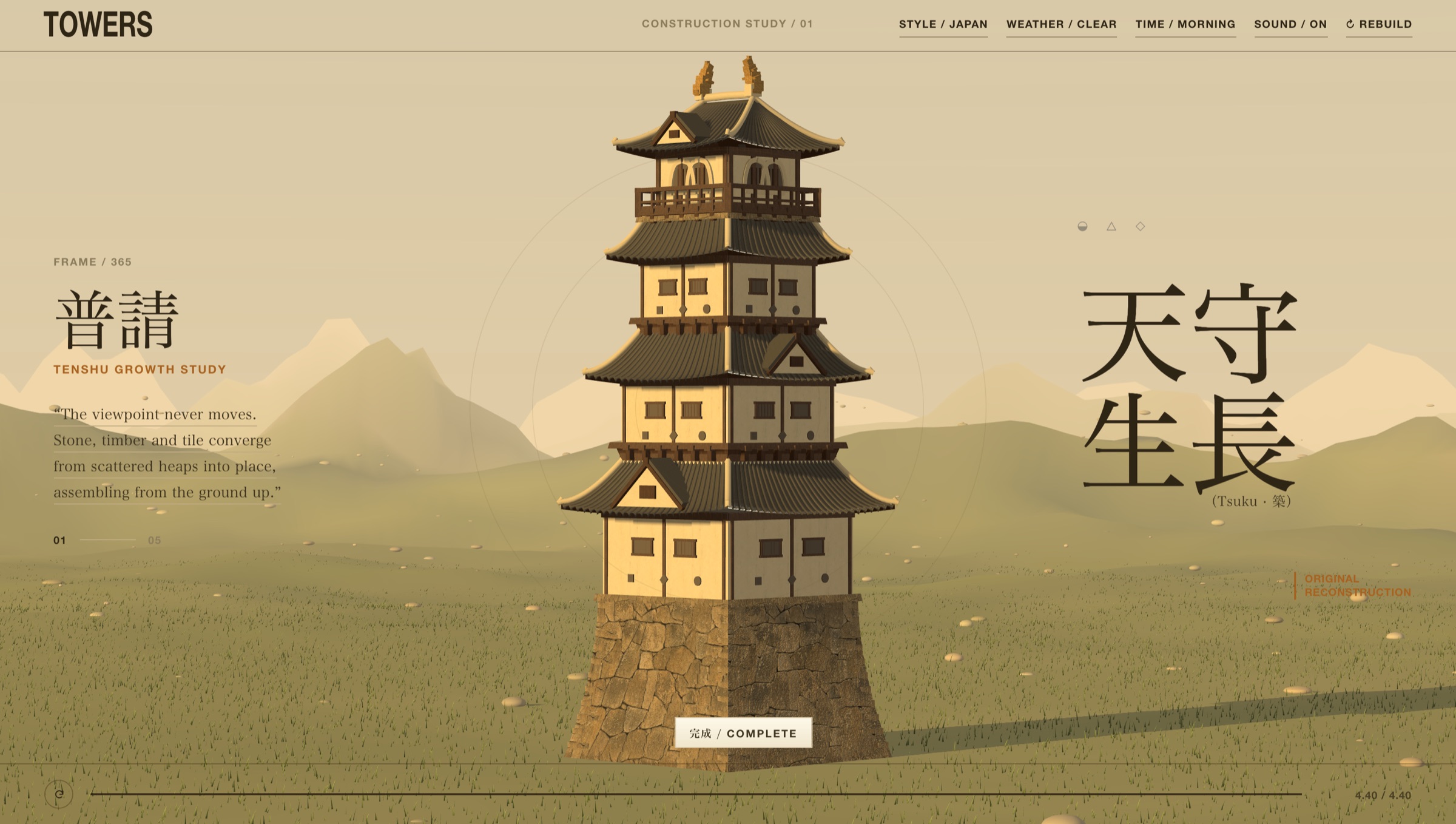
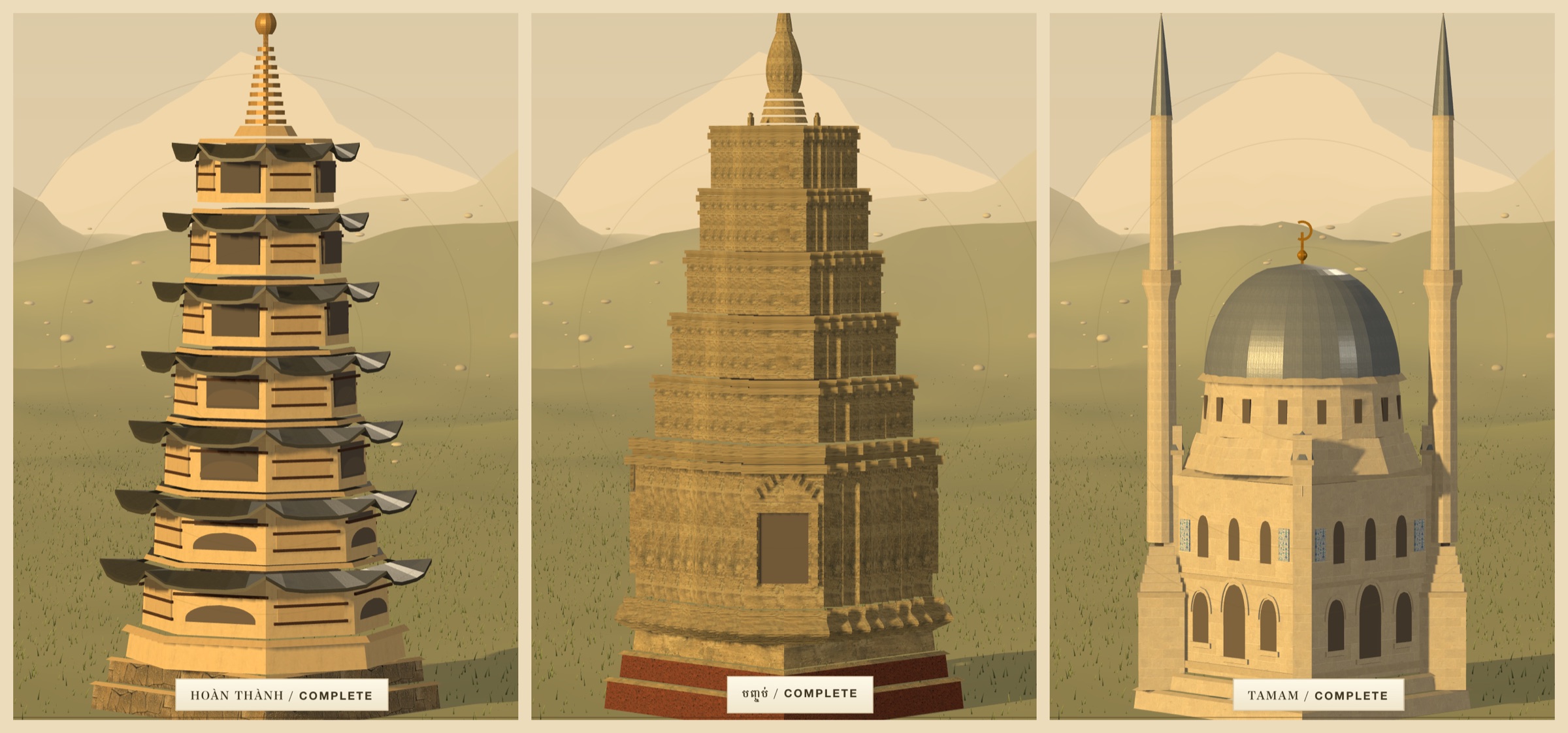
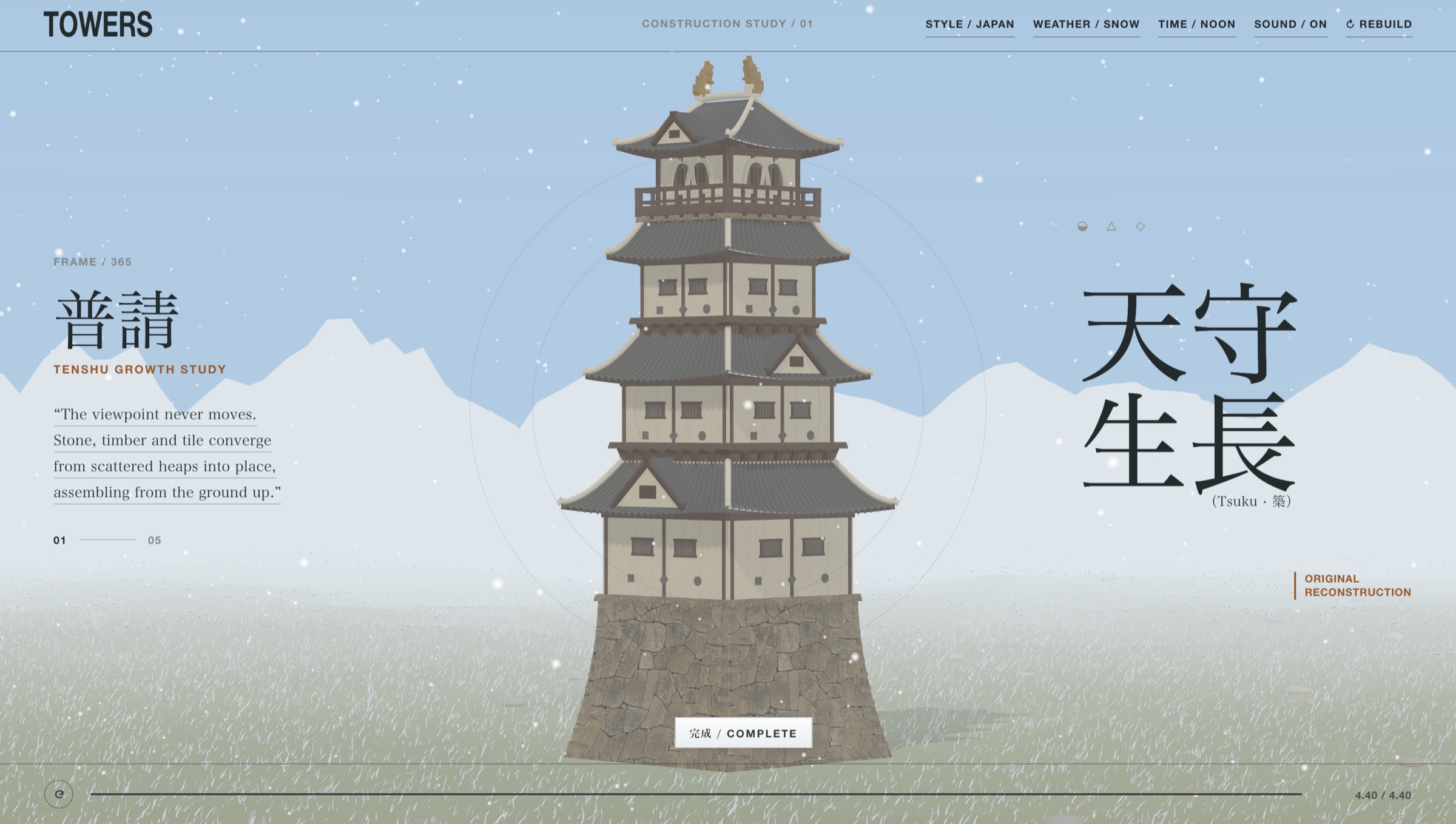
Every tower in this study exists from the first frame. A single clip plane travels up through the scene; whatever it has passed becomes finished masonry, and the scaffolding above it stands one step ahead of the work. Switch the style and the same four-and-a-half seconds run again as a different civilisation.

METHOD / HOW IT IS MADE
iThe cut plane
A single THREE.Plane faces down and climbs. Every structural material clips against it, shadows included, so nothing above the line is drawn. A faceted cap disc rides at the plane's height and rescales itself as the section changes — square through a hall, octagon through a drum — which turns a hollow slice into what reads as a solid course of masonry.
iiThe architecture
No models are loaded. Swept plans, prisms, rings, arcs, tubes and lathes generate everything. One roof-profile function places every tile as a function of its position along the eave — lift, tip, flare, truncation — which is what gives a hip roof its upward curl and lets a Chinese eave fly. Six styles are six parameter sets over the same primitives.
iiiSky, weather, sound
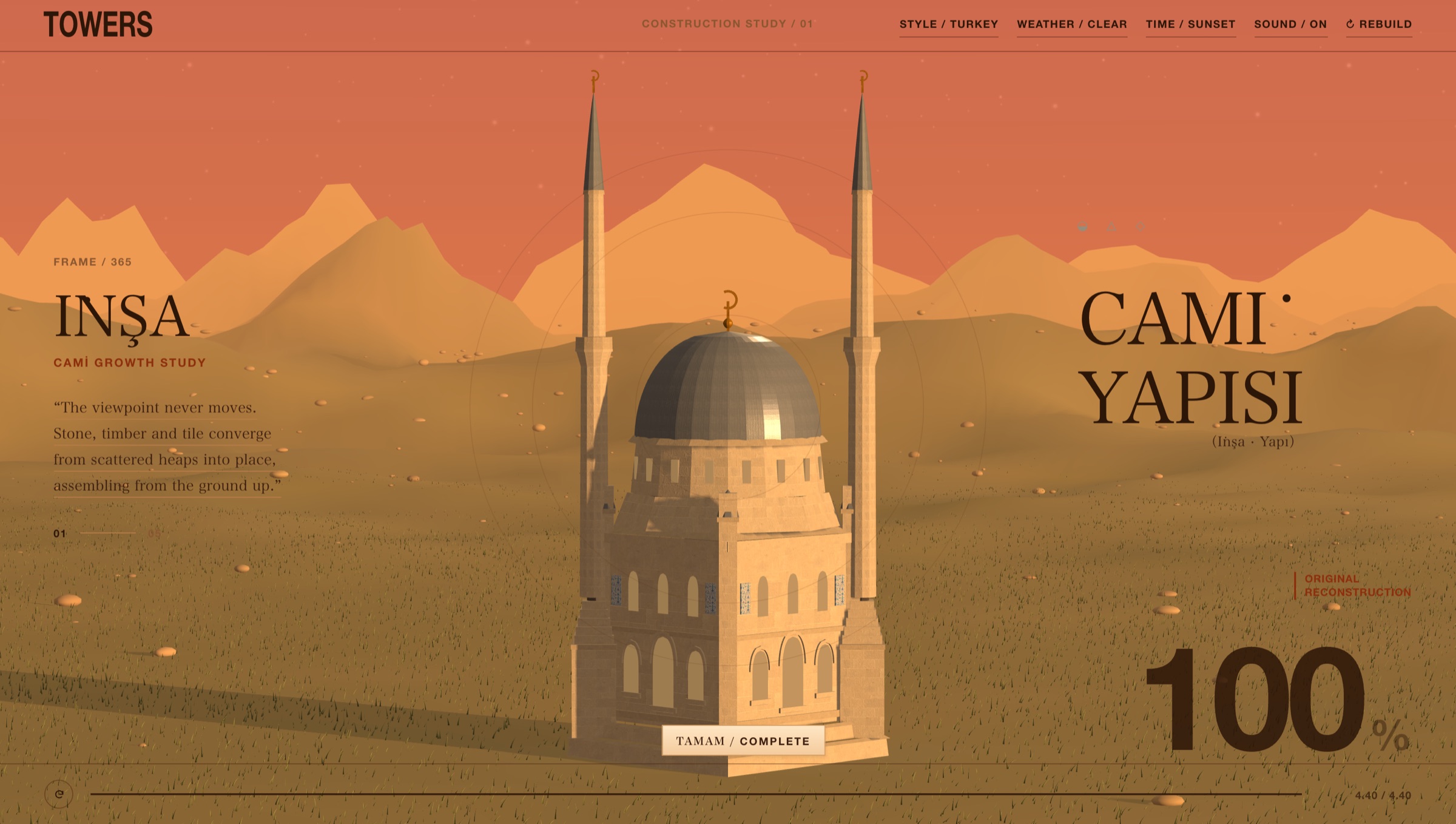
Four times of day cross-fade rather than cut, each with its own sun, fog, ground and gradient sky; night raises a field of stars. Rain pools the ground, storms drive the rain sideways under lightning that flashes on its own light, and snow banks up until the field goes white. Every knock, bell and weather bed is synthesised live in WebAudio — no audio files.
Six architectural styles generated procedurally in Three.js — geometry, canvas-painted textures and WebAudio sound are all synthesized at runtime. No model files, no image assets, no network requests.